

· Leer en castellano
It is yet to be defined, what exactly exc is. this whole apparatus is based on the assumption that exc is an impersonal figure.
Behind this deliberately elusive definition lies exc: one of the most vigorous, experimental and genuinely transdisciplinary independent art projects that have emerged in Europe in the past decade, where audiovisual art and electronic music meet a pointed, necessary rethinking of creative authorship.
The project spans audiovisual, literature and electronic music projects amongst other disciplines, and its origins and intentions invite us to question the very concept of the artist: what they are, what they do, and why. Twelve years in, more than fifty artists and scientists from different disciplines stand behind exc, and yet you will never know who actually made what. Operating as a laboratory that draws from cinema, rave and the concert hall without seeking to represent any of them, the finished work is never the point: the process is.
While most contemporary online creation rarely goes beyond the surface, exc draws from philosophical tradition and art theory, not out of nostalgia, not to reclaim a past that was never better than the present, but to face today's challenges with clarity, without fear, without rush, in their own unique creative language. What matters most is that the artists involved, and those who encounter their work, will not come out the same. And, as they explain in this in-depth and not to be missed interview, exc will likely mean something different each time someone steps in to find out what's there. Isn't that precisely the kind of art worth betting on?
For this special collaboration, BORGBORG, whose album Loveletters was released on About Repetition earlier this year, has put together an exclusive mix drawing from both existing and unreleased exc productions. Split in two by a deliberate silence at its midpoint: "The structure of the mix is symmetrical. The first half is about society, the second half about the individual."
exc mix by BORBGBORG.
Vanity Dust: In an era of maximum visibility, where exposure is associated with achieving some kind of positive outcome, the exc project seems to confront this message head-on, precisely by dissolving the identity of those who are part of it. What is the idea and the objective behind this artistic principle? Where does it come from? Is it inspired by other projects or movements, perhaps from other periods?
exc: The starting point was never 'how do we become invisible?' It was more like 'what happens when you systematically undermine the expectation of identifiable authorship?'
Historically that's not a completely new idea. In medieval building guilds, authorship was basically irrelevant. Cathedrals are collective processes, not individual statements. The idea of the Gesamtkunstwerk carries something of that too: individual contributions dissolving into a larger form. And then in the contemporary context you have projects like Underground Resistance, who very deliberately work with anonymity and collective non-identity to shift the focus from person to structure.
In art theory this was made explicit at the latest in the 1960s. Lucy Lippard writes about how the artwork becomes increasingly dematerialised, and with that, classical authorship starts to become unstable. Art is no longer primarily an object but an action, a process, a situation. And in its most advanced form, it can ultimately become an infrastructure such as the NPO “About Repetition” we founded in ’22.
So there's a whole lineage there. exc sits somewhere in that tradition, but the question we keep returning to is less about hiding and more about what opens up when you remove the author as the organising principle and move beyond the myth of the artist as a sole genius. And part of the answer is practical: the processes we're working with are simply too long, too transformative and too complex for a disciplinary approach. That ends up affecting the people involved too, their roles, their professional identities. Once you look past those conventions, everything becomes more open-ended. The work can go places it wouldn't otherwise go.
These are also times of personal definitions, everything must be clear and reducible to a few words, and there is a great fear that the message of who one is or what one does won't reach a supposed audience. exc breaks with this too: on the side of belonging (nobody is exc, and when you "become part of it" you become an anonymised nobody) and on the side of definition, since part of what exc is, is that it cannot be precisely defined. What are the philosophical principles behind this?
Early on we were pretty heavily influenced by Deleuze. What he calls the Body without Organs is actually his term for that process of becoming nobody. The BwO isn't an anatomical concept, it's not literally about being without organs. It's a counter-concept to organisation, to fixed structuring, to the hierarchy of functions. The body as we know it is an organism. A system where every part has an assigned function, where everything has its place. The BwO is the resistance to that kind of identity fixation. And what it produces is what Deleuze calls a plane of consistency:
First, it's a plane without hierarchy. No overarching organising principles, no centres, no fixed identities. Everything exists on the same level, nothing subordinated to anything else. A kind of radical horizontality. That's also why we work in constantly shifting teams, the constellation changes depending on what the work needs, not on who holds which role.
Second, it's a plane of pure intensity.
Instead of fixed forms and functions, there are only intensities: Forces, energies, flows that connect, separate, move.
Deleuze distinguishes between what is extensive (measurable, fixed, identifiable) and what is intensive (unfixable, always in transition, always between two states). We understand art as fundamentally event-based in this sense. It doesn't have a stable existence, it happens.
Third, it's a plane of becoming rather than being.
Deleuze and Guattari often use music as an example. An organised piece of music has a structure: melody, harmony, rhythm, form. A BwO in music would be something like what happens in certain electronic music, in noise or in drone. The dissolution of fixed melodic and harmonic structures in favour of pure intensities, sound surfaces that resist hierarchisation. The plane of consistency is then the sound space that emerges through this de-organisation, where new and unforeseen connections become possible. That's roughly how we understand exc, as something like that plane or space.
And because we think of artworks as structurally incomplete, as never really finished, we keep returning to our projects, keep working on them. They're programmes more than objects, while objects can be part of the programme.
Unlike the "brands" with which many artists identify themselves in a commercial way, to sell themselves, exc defines itself as a tool, a kind of catalyst that allows projects to develop around its ambiguity and its extensive range of concepts. How did you arrive at this way of working and developing the project?
exc might actually work as a brand as well. There's a seal attached to published work. It signals that something has been developed according to exc.
But the difference is that we don't use the name to sell anything. And who would get the money anyway, when there's nobody there? So the value is stored in the process itself, which is essentially invaluable, rather than in the artefact.
That shift came relatively early: away from the work as a finished object, towards the event. We became less and less interested in producing something 'complete' that would then circulate, be collected, be evaluated. Instead it was about generating situations that take place in time, and then dissolve again.
An early expression of that were artist books. Not in the classical sense of bibliophile objects, but more as echoes of installations: produced transdisciplinarily, often in connection with sound, text, visual elements, and sometimes translated back into other media. The book was less an endpoint than a transitional stage, a kind of temporary storage.
By now our work has extended to new media, such as film and digital formats, but with the slowness of books. Artist books allowed us to work in a very radical way for a long time, but it's good that we no longer need the conservative format of the book so urgently. At most it still serves us as a way to structure our own thinking around a project. The work has outgrown the container.
Another consistent idea within exc is the challenge to the concept of ownership, something deeply embedded in capitalism, in its ideology and current deployment. Rather than creating in order to achieve personal credit, exc perhaps seeks to question this relationship of possession. Is art too attached to the market economy? Are they inseparable, or are there other ways of conceiving art beyond its commercial success? What relationship could exc establish with artistic creation and one of its great problems, like precarity?
The question is if exc is even operating in this context. The focus is in the process of creating, not in the distribution of finished artefacts.
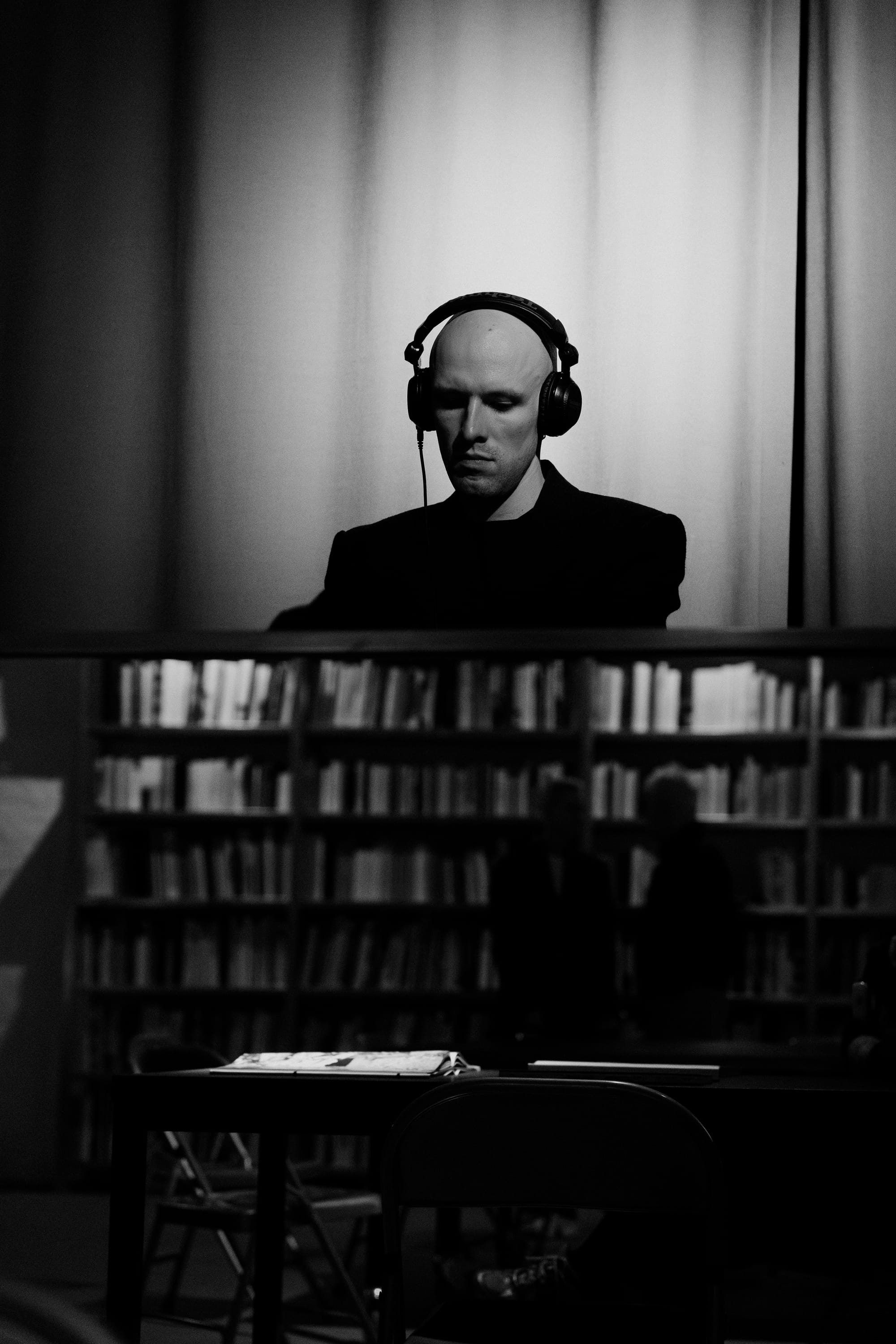
exc also speaks of integrity, of the inviolability of figural dignity. How would you explain this principle, and how does it connect with the other pillars of the project?
This is a reference to the basic human rights. We have to take care of the figure and must prevent harm from it, give it some space for its existence, see what it wants to be, rather than putting it in its place. While the other statues are opening the space for experiments and curiosity, this principle is positioned in contrast to them and seems rather harsh in hindsight. It's also the most brief statue, which makes it very powerful in terms of communicating its purpose. It proposes to reflect on what we do, to be aware of the context we are operating in.
excudit is the Latin mark that appeared on old engravings and works of art to say "he/she made it." Its abbreviation is exc. The project seems to want to invert this mark, saying something like "nobody made it" and therefore "it belongs to nobody." Is this the starting point of the project? Is exc, in a certain sense, a way of confronting a discomfort present in the contemporary art world and its creations?
This “exc/excudit” was really one of the most fascinating findings so far. When loosen ends start to connect naturally by sheer processing of the matter. But yes, we are affected by the dynamics in the industry and cultural sector and we need to find (new) ways to exist in it. There's a wonderfully self-referential twist in there. 'exc: exc' signals that the process and the dispositif become identical with the author.
exc — excavate [body without organs LP, About Repetition, 2026] · Bandcamp
Moving into exc's productions, the project stands at the crossroads of electronic music, thought, and audiovisual content. What is the relationship established between the different artistic languages: image, video, and music? How does the creative process behind the pieces created by exc actually work?
The artist book was the container at the beginning, the form that could hold everything at once. Our first film was essentially a scored artist book, not unlike Chris Marker's La Jetée. For the second project we threw found footage and voiceovers into this rigid structure and let that tension do the work. The third major project was built on a series of eight artist books we'd previously published, but this time it developed a proper storyboard and choreography. Something comparable to non-dance in dance theatre. That became a serious studio production.
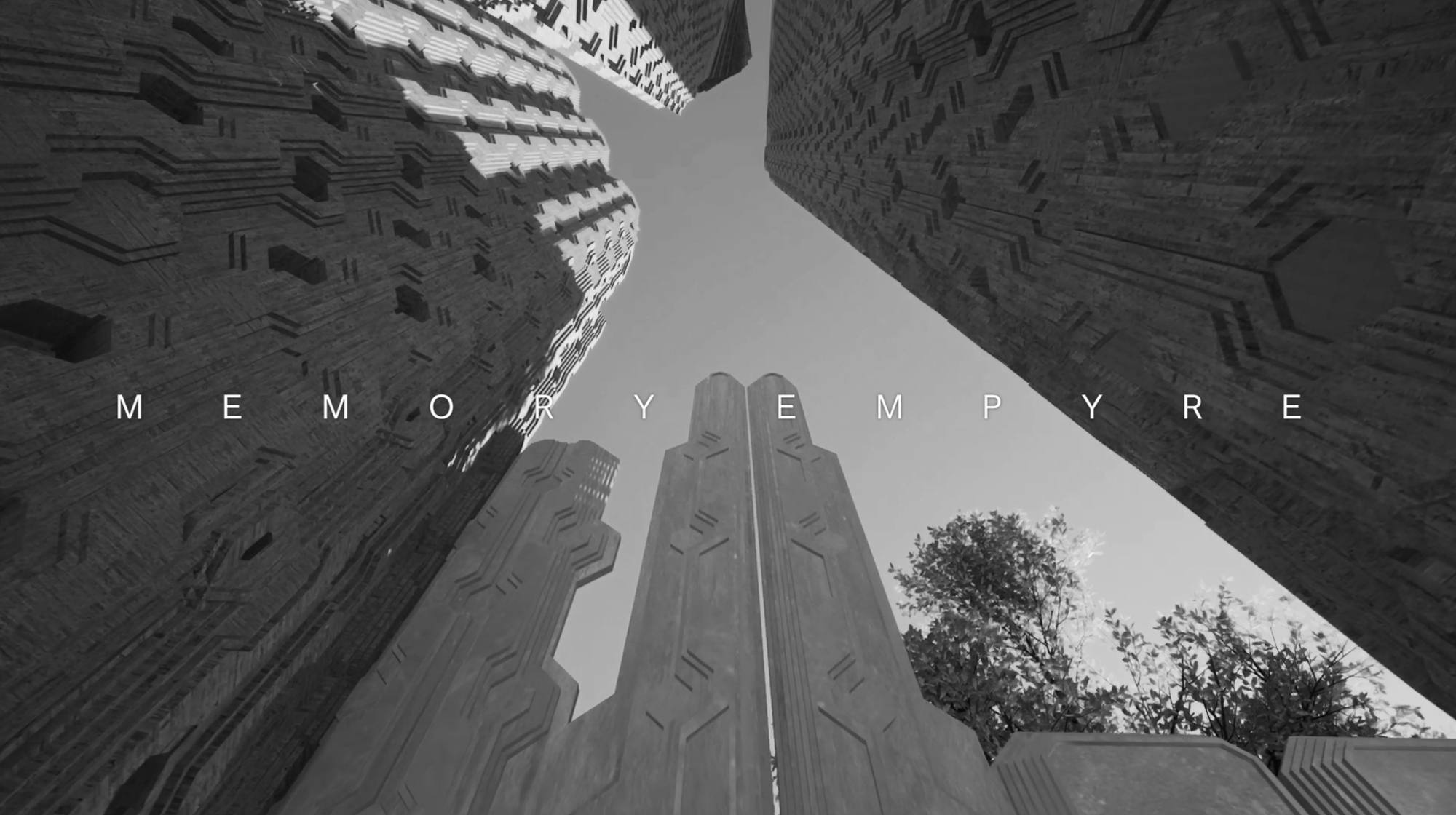
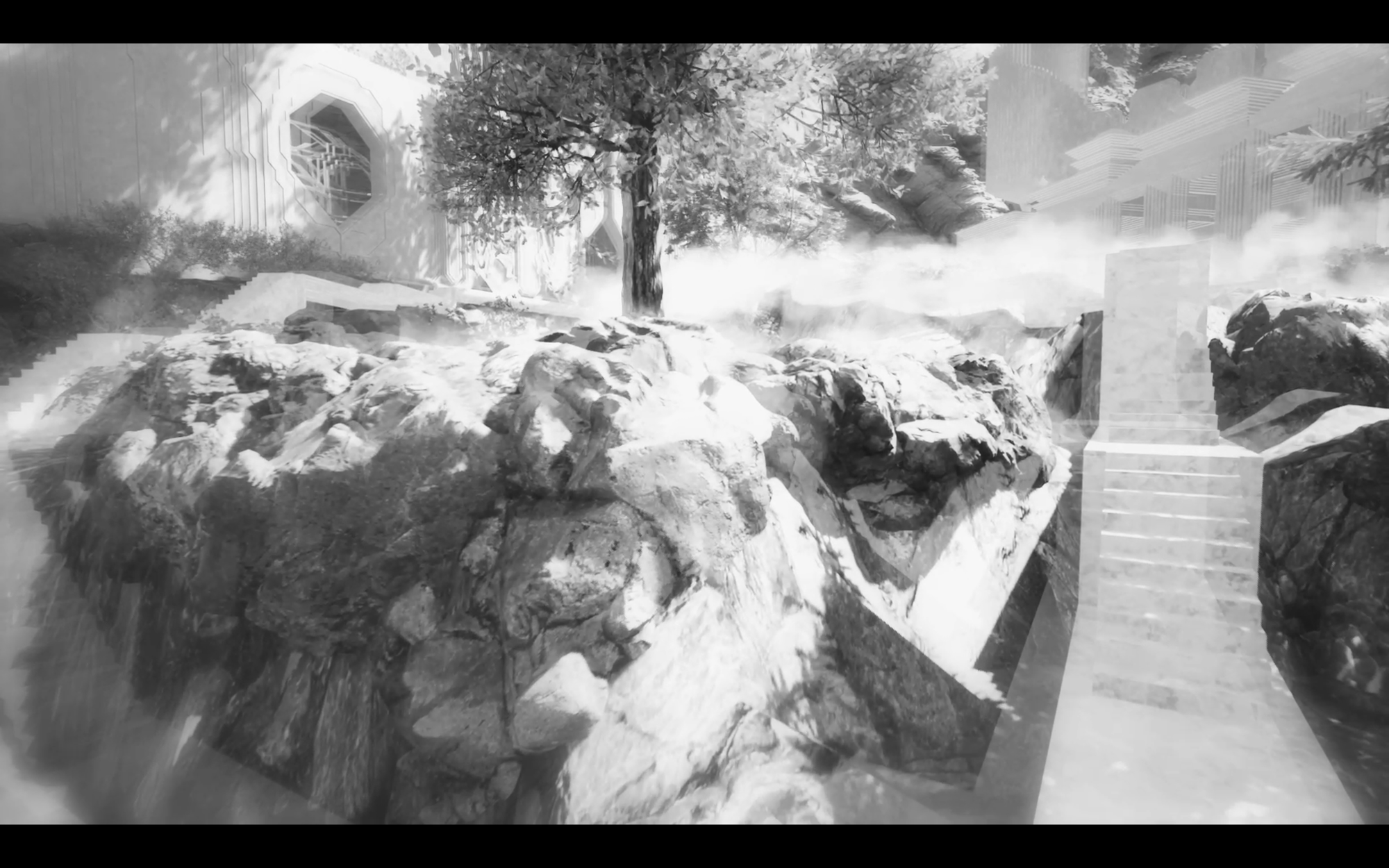
The fourth project is still a work in progress and will probably take a few more years. Memory Empire has a very complex narrative and will likely be structured more like a walking simulation or explorative narrative in the sense of gaming.
Built to be moved through rather than watched. And again a studio production, but this time with a completely digital set.
What stays consistent across all of it is where the process starts: always from art and literature, and then trying to think of music, architecture, typography and dance as equally weighted elements. Not as decoration or illustration, but as parallel languages that develop alongside each other. No hierarchy between them.
Which brings us back, I suppose, to the plane of consistency.
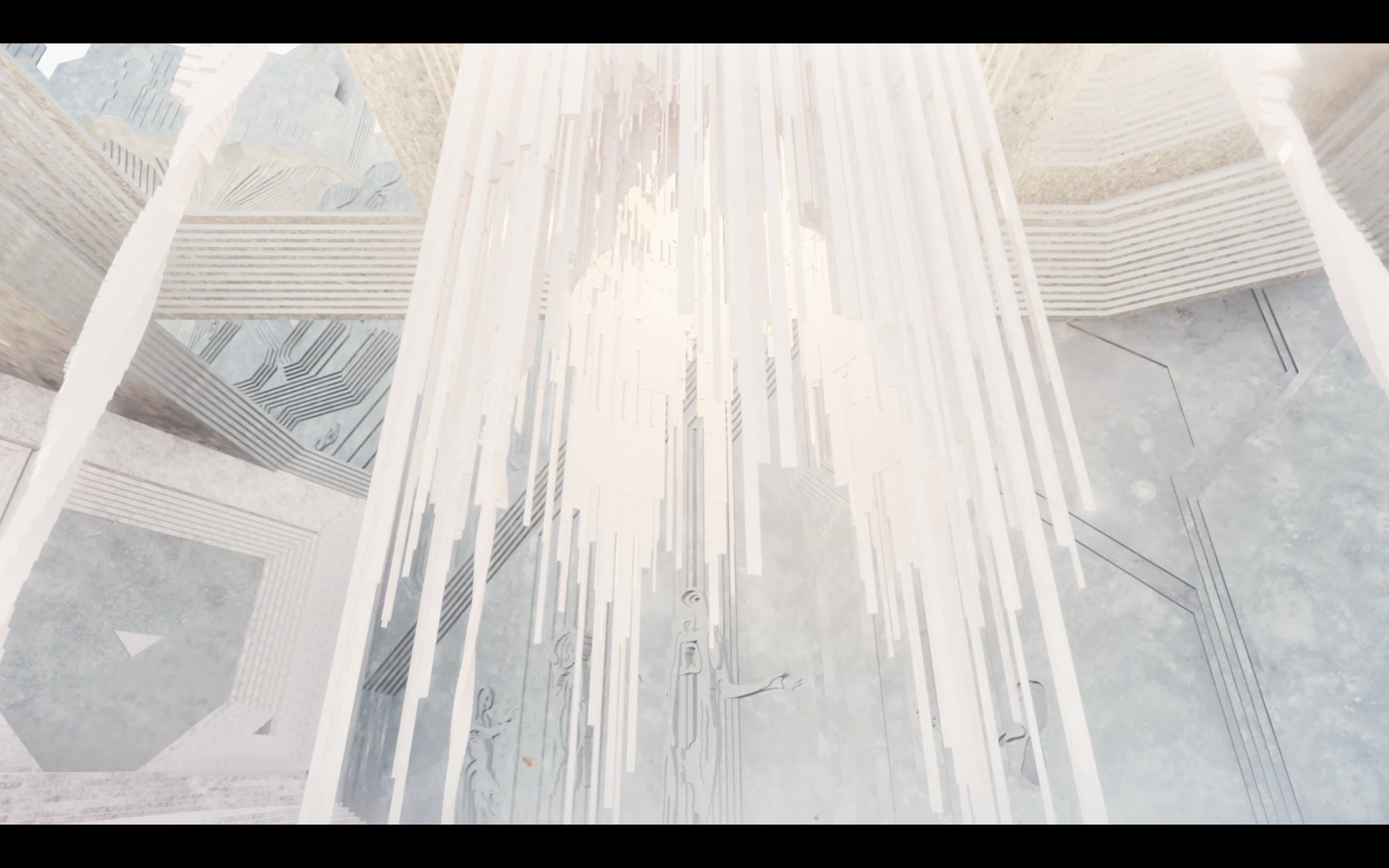
There is no shortage of electronic music artists who seek only the "functional" side of their output: music that is danceable enough, within a rising trend, capable of generating visibility, sales, and, with luck, a few bookings. exc, by contrast, escapes this logic and tries to bring content and concept to the piece, whether musical or audiovisual. Is this one of the requirements of the project, as creative freedom also is?
Concept yes, content no. We stand here with empty hands and have nothing to offer. We're only the spectator of the spectator and we believe that perception itself is the true content of a piece of art.
But there is a utopia behind all of this. What we're working towards is a kind of radical audiovisual high culture that exists in the in-between space of rave, cinema and concert. Not quite any of those things, but drawing from all of them.
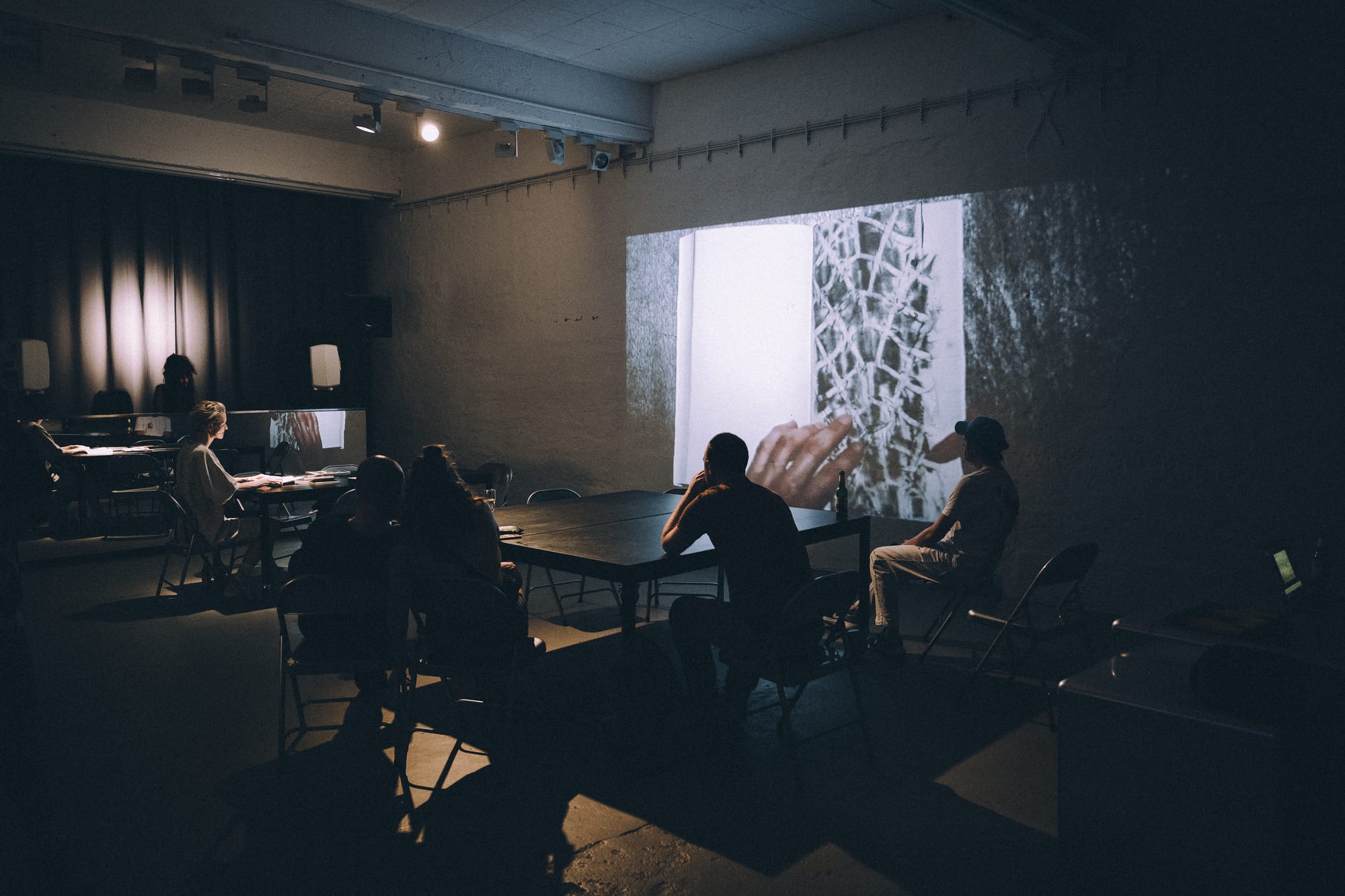
Our own project spaces function as laboratories for that, as places where you can test what that hybrid experience might actually feel like. Exemplar X is probably the clearest expression of that so far: a format that refuses to settle into an existing category.
And we're not alone in that impulse. Festivals like Atonal, Mutek or Lunchmeat are, each in their own way, attempts at building a dispositif for exactly this kind of experience. Spaces where electronic music stops being purely functional and becomes a connection with architecture, literature, dance and - yes - perhaps art someday.
exc also challenges one of the taboos of artistic production: the ghost producer, that hidden figure who creates an artistic product (whether a book, a song, or an album) for someone else, who will present it as their own work, claiming the credit and paying the ghost producer for their silent work in the shadows. Is exc a direct challenge to this way of working that so many artists engage in? Does it represent a reconfiguration or a dignification of the way ghost producers are treated within a capitalist order?
Yes, it really is a dignification. And above all it's about transparency. Something that looks like a subjective monolith from the outside might simply be a company with 200 employees. That's worth naming.
The ghost producer in DJ culture is actually completely natural. A DJ set has always been built from other people's work, recombined, recontextualised. Nobody calls that dishonest. So in a way exc just makes explicit what has always been happening anyway.
The deeper utopia, and we're still far from it, is something like truly mixable works in the sense of DJ culture: a further development of what Umberto Eco called the 'open work'. A piece that is structurally designed to be continued, remixed, inhabited by others. Where authorship isn't a fixed point but a relay.
Funnily enough, the artist book is where we've always felt that potential most clearly so far. Which is actually why we've just had our entire artist book collection scanned, all 500 copies. We're curious whether we can do something with that archive that's comparable to a DJ mix. We don't know yet what that looks like, but the question feels right. The project is called “About Archive” by the way, so watch out for this, we're gonna drop a first version in autumn.
Exc — Excite [seductive supervision LP, About Repetition, 2026] · Bandcamp
The audiovisual pieces in exc are an essential part of the project, from its beginnings centered on electronic music to its audiovisual expansion. How do the filmic ideas emerge?
excavation is a hybrid of experimental art film, music video, and silent cinema — a seven-chapter work built around a single, slowly unfolding question. The film's seven chapters, the album's tracks, and the voice-over texts are all rooted in seven artist books published by exc — a structural thread that ties sound, image, and language into a single body of work.
We've gone through quite a few different formats over the years. Scored books, found footage, studio productions with choreography. Each project found its own container.
pxrkxng lxt 2 is a silent film born from a 2014 exhibition in a Düsseldorf underground car park, weaving language, photography, music and image into a lyrical meditation on power, self-reference and the cyclical deadlock of eros and thanatos.
But right now what's really driving things forward is a new development: we have a few new contributors who are exceptionally good at generating and editing moving images with AI. That's our main focus at the moment. It's opening up possibilities that simply weren't there before, both in terms of speed and in terms of the kind of imagery we can produce. exc.directory is the first project where that's fully in play, and it's changing the way the whole thing moves.
A new filmic chapter is currently being prepared, the second, which will be the release of Body Without Organs on the 19th of June. Is it understood as a continuation of the previous one? If so, in what way? What has the process been from conception to result?
The basic idea across all four exc.directory films is to place figures into the typologised settings of each chapter. But these figures don't really move through their own agency. They're moved by the space itself, or more precisely by the exc word that defines the typology of that space.
The word generates the room, and the room generates the behaviour.
What that produces is something chaotic and contingent in the narrative, the figures become grotesque, almost like they're caught in a system they can't quite orient themselves within. Which feels right, conceptually.
The challenge was to take that episodic, fragmented quality and lead it towards coherent points, moments where something crystallises, without betraying the typological logic of the spaces. It's a constant tension between structure and drift. Body Without Organs continues that logic from the first chapter but pushes it further into the body, into interiority. The spaces become more psychological, less architectural. The figures are moved by forces that are harder to name.
Could you describe the audiovisual work of exc narratively? Are there elements, motifs, or concepts that can be identified as the core of the films?
That's actually easy to answer: emptiness. And the self-referentiality of systems.
Systems that refer only to themselves, that generate their own justification, their own language, their own logic and in doing so produce a kind of structural emptiness at their centre. That's the core. Whether it's the body, the economy, surveillance, or authorship, each of the films is really circling that same void from a different angle.
More than thirty artists make up the exc.directory project, from very different sensibilities and trajectories. We won't be discussing specific names, but it would be interesting to know more about how artists approach the project, and perhaps about their reasons for doing so. Does exc reach out to them? Does it work in both directions? What might motivate an artist to join exc and become, paradoxically, part of a "nobody"? Could it be a weariness with the fact that, in their artistic career, they are always required to be a "somebody"?
We reach out to artists we find interesting, and we try to pay them fairly. If we're happy with what comes out of a contribution, we try to bring those people back in.
The more you've made together, the more trust and mutual understanding develops. And the more interesting things become possible. It builds slowly but it builds well.
And yes, I do see a genuine longing in a lot of artists for conceptual sharpness and a sense of being embedded in something larger. Which is interesting, because two of the great achievements of modernity, the autonomous artist and the ungrounded, self-justifying artwork, seem to be losing some of their shine. Maybe that's a sign that we're slowly moving into what you might call late modernity. The individual genius as the organising principle of art feels less and less sufficient.
But it's important not to slip into a pre-modern regression either. It's not about going back to the anonymous medieval craftsman or dissolving individuality into a collective. It's something more nuanced than that:
a voluntary, temporary, conceptually grounded dissolution. You become part of a nobody, as you put it, but you choose to, and you know why.
About Repetition is the label that functions as an extension of exc, its purely musical arm, releasing adventurous, substantial electronic music that resists easy listening. What was the process behind the birth of the label, what have its releases been, and what are the plans for its future?
Worth clarifying first: About Repetition is actually a transdisciplinary art association, not just a music label. It only started operating as a label this January, so that's a very recent extension of what was already there for 5 years.
BORGBORG — The Current [Loveletter LP, About Repetition, 2026]
In the next 12 months the plan is to release all four parts of exc.directory through it. In February the debut album by BORGBORG came out: Loveletter. In autumn and winter the debut albums by Anodized and Felix Lindner will follow. And this May there's The Island by Alphie_Renn, she excerpted video material from the Epstein Files and produced a soundtrack for it. That one feels very much in line with what the label is trying to do: push audiovisual work, keep the connection between image and sound as tight as possible.
That's really the thread running through all of it.
“About Repetition” as a label isn't trying to release adventurous music in isolation, it's trying to build a context where music and visual art inform each other. The releases so far are very different from each other, but they all point in that direction.
BORGBORG — Mercy (LADA Remix) [Loveletter LP, About Repetition, 2026]
Regarding the mix prepared for Vanity Dust, it would be very interesting to know how it was put together, since it includes not only current material but also pieces from across the more than ten years of the exc project. Can one speak of a certain evolution in the project's sounds? What is the attitude someone should bring to listening to it?
The structure of the mix is symmetrical, there's a real pause in the middle, a deliberate silence. The first half is about society, the second half about the individual. And in both cases what the music is really circling is emptiness, the emptiness of the system called society and the emptiness of the system called the individual.
As for the attitude you should bring to listening: I think patience, and a willingness to sit with that emptiness rather than wait for it to resolve.
And honestly, thank you. Thank you for the opportunity and for the impulse. Looking back across twelve years of material, something became very clear in putting this together: it's all more coherent than it sometimes felt from the inside.
The mix shows that it really is worth returning to the structure again and again. There's also some unreleased material in there from the upcoming chapters of exc.directory, so it's not just a retrospective, it already points forward.
exc mix by BORGBORG.
exc mix by BORGBORG — Tracklist
The artwork and visual identity of exc is also especially significant. What has been the visual proposal to accompany the mix for Vanity Dust?
The visual identity of exc and About Repetition is built on the typeface “Excidenz-Grotesk”. It derives from a sample print that is dated in the 1920s. It was designed alongside the development of About Repetition and is now providing a part of the infrastructure that we operate in. For this mix, we will try to use some of its letters and glyphs to create the artwork with some custom coding.
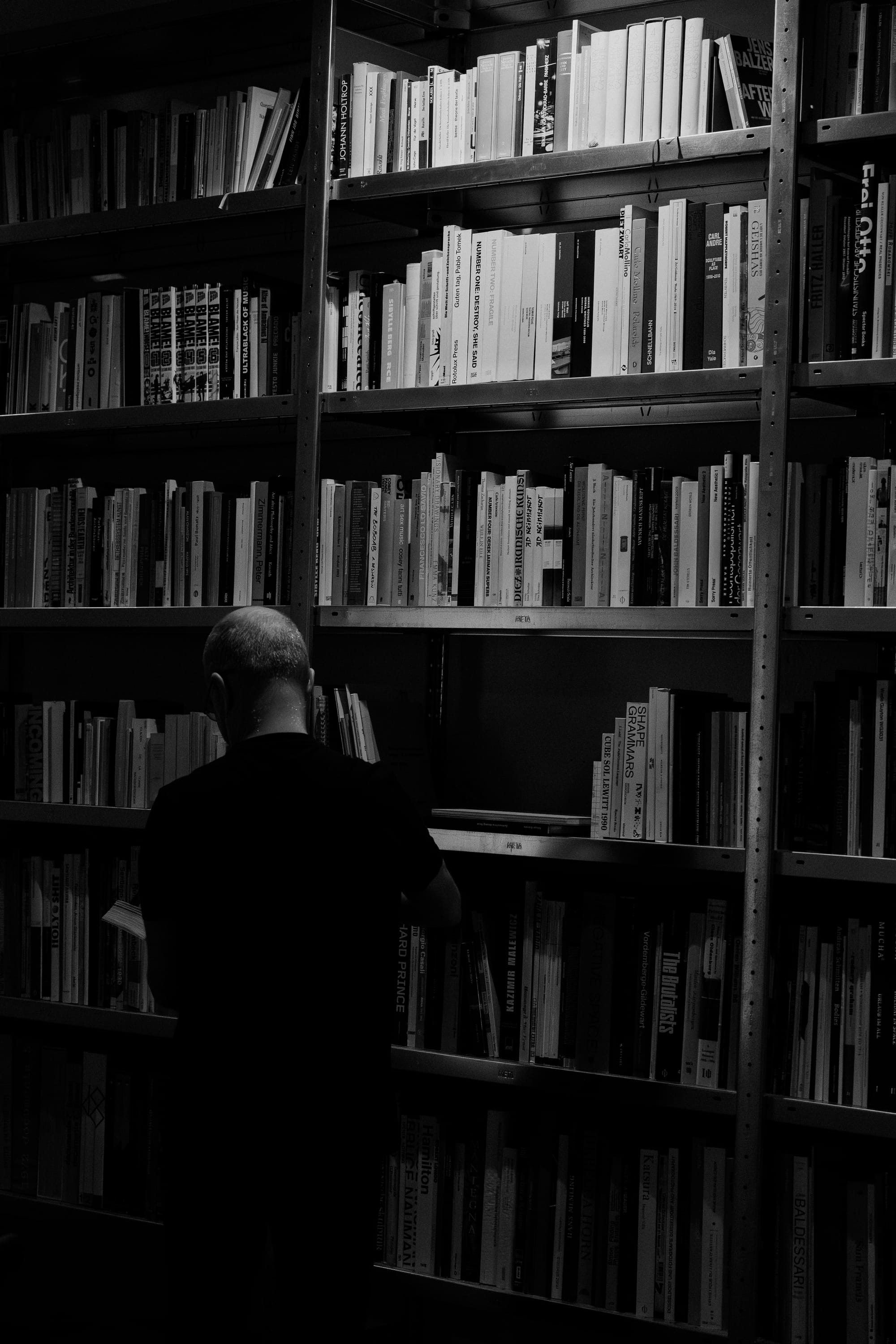
To close: since exc extends across as many as forty words and concepts, many of which have not yet been approached, how were these words chosen? How does an artist choose one of them, and how is the relationship between their interpretation and its development established?
Hehe, there's an old Zen koan: 'The great way is simple, but without choice.' And that's basically it. It's simply all English words starting with exc. The only decision was to explore everything the dictionary offers under exc.
Niklas Luhmann called something like this autopoiesis, a term from biology for a cellular system that creates itself without ground or origin. Once that first move was made, the system generated itself. After that initial setting we placed the 25 ghost producers intuitively, letting the words find their interpreters more than the other way around.
Now you could re-conceptualise the whole thing again, imagine having one person remix all the material across all forty words. That would close the loop in an interesting way. We'll see.
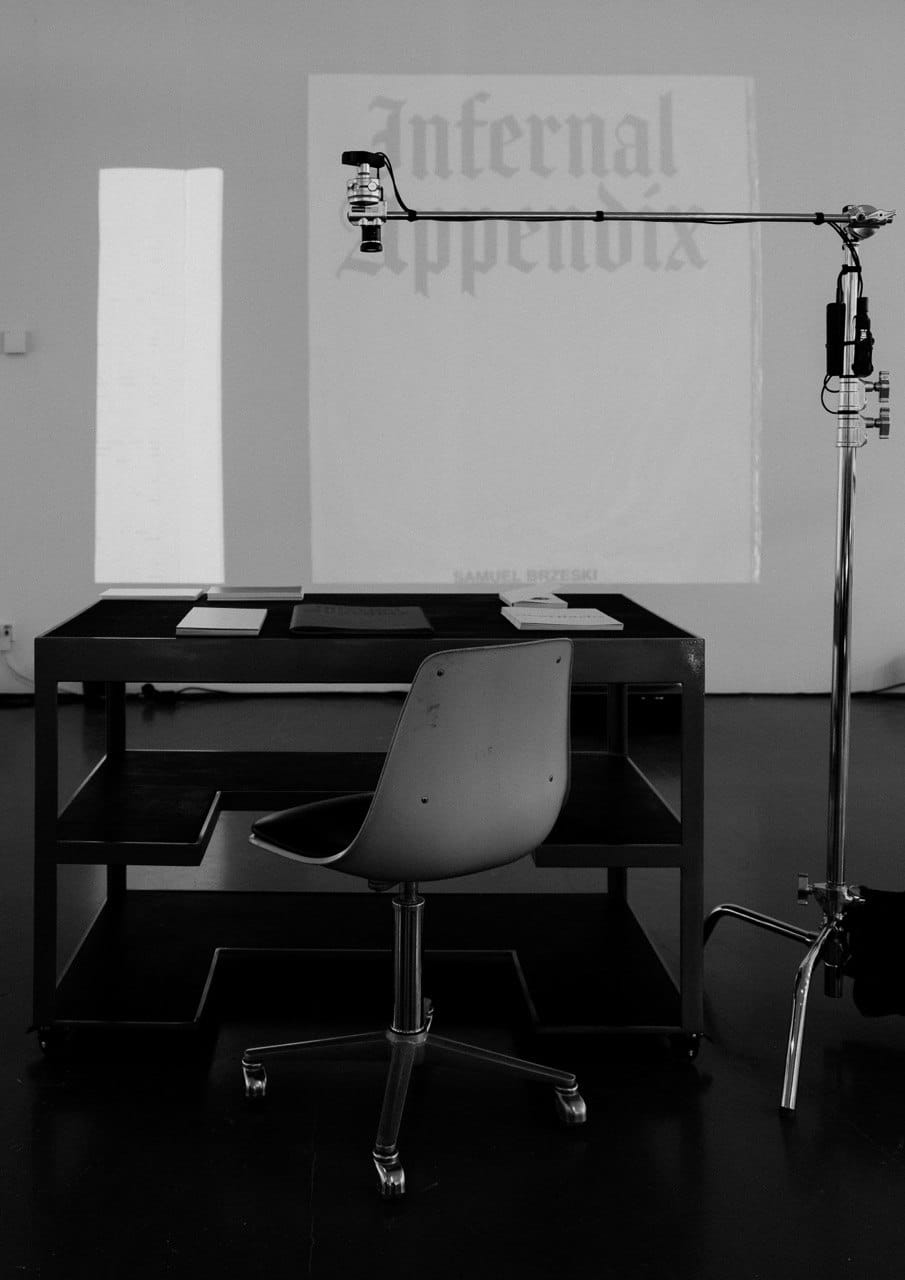
In this sense, can the project be considered to have a projected end date, that is, will there come a moment when it is considered complete and closed, or might new territories or unexpected movements open up new stages, concepts, or proposals?
When a project ends, it is over, literally and figuratively. Let’s avert the “Deadline”. In our project “Exemplar X” we inspect books, the finished artefact par excellence, and expand them spatially (space) and acoustically (time).
We like the analogy of a photograph that is developing in chemicals in front of your eyes. At one point it might be fully developed, but when you look at it a week later, your perception of the very same thing has changed, because you also have changed.