

Amid the noise of social media, the overproduction of electronic music (and music in general), the opportunistic relationships and all those other things that might also feel familiar to you, Jan Goertz emerged as one of those artists who brought light into my musical feed. He added meaningful conversations, stimulating ideas that soon took shape, and even changed the way I understood techno.
A lover of fast-paced sounds —“highly functional body music,” as he describes them— and of weaving light and darkness through his productions, yet always open to other genres and moods, German artist Jan Goertz continues his path through the intense, fast-moving electronic world with energy and independence.
Behind the HYPERFOKUS event series and the carefully curated EXEKUTE label, this in-depth conversation —perhaps the most extensive interview of my career— is an open and honest exchange between Jan Goertz and Vanity Dust.
We speak freely about what fascinates us in the electronic world, what unsettles us, the mistakes we’ve made, and, at the same time, how we find meaning in what we do: acknowledging frustrations and failures, yet still searching for a way forward that stays true to our values, helps us overcome crises, and strengthens the bonds that inspire us in our creative journey and in the essential search for balance.
Vanity Dust: When we commented on the possibility of this interview, you told me it would be your “official” first interview.
Jan Goertz · You Play I Write 78
For old-school artists, being interviewed is just part of the job. They have press agencies, PR and interviews scheduled. But I guess this is not your case, as you don’t have a press team behind you telling you “talk to this guy”.
So I wanted to ask you, in this first approach: what is your current path as an electronic music artist? How do you see yourself now? How have you built not just your taste but your idea of the scene and your place in it?
Jan Goertz: Actually I did have an interview about nine years ago for a local free magazine, funded by ads. So I had one interview there when I had been playing for two or three years at that time, with different music and under a different alias.
And it was… not pleasing. The guy wasn’t really into electronic music, so the wording he used didn’t represent how I felt back then, and definitely not how I feel today. So I wouldn’t count that in and this would be my first real interview where people are actually interested in the person, not just like “let’s do something for the paper.”
How old were you at that time?
Around 21, I guess. I’m 30 now, turning 31 soon. It was a long time ago. I had my 12th dj anniversary this november 2025.
Getting back to your first question, there are two main things here. Since I started, I told myself that I would never want to depend solely on music as my main income. I studied history and philosophy, but never finished, and then I did training to become an event manager. So my job has always been around events and gatherings. Music was always my side thing, even though it’s where I spend most of my actual time. That hasn’t changed til today. But I still have a main job that pays my bills, so I can be completely free and spontaneous with what I do musically and everything connected.
Where I am now, and where I want to go, is related to everything that happened before, especially the residency I held for a little more than three years, between 2017 and 2020 in a local club in my town.
What music did you play then? Do you consider it part of the same trajectory as now, or different?
I originally come from deep and disco house. I played in local dancing bars nearly every weekend in 2014 and 2015, around four to eight hour sets each night. That’s where I gained most of my experience. Around 2016, I started researching more on techno, it was the Drumcode era… we all have to start somewhere.
The club I mentioned before was also one of my first real techno club experiences. Before that, I never really partied, took drugs or experienced everything related.
All that came in my early 20s and with it and all the new influences and inspirations over time, I re-arranged my sound again.
Another good example is this faster trance and techno, like the Fast Forward collective from Copenhagen, that influenced me a lot. I mean names like Sugar or Schacke.
These producers had a kind of melodic, shiny, almost fantasy-like touch. They brought something less dark to techno, still fast, but not as brutal as the hard-techno trend.
Exactly. And that’s a great point, because that’s basically the core of my vision on music.
I’m not really attracted to loud, aggressive and hard techno.
I like it fast and drivy, yes, but I’m searching for emotional triggers, sweet bitterness, depth and interesting sounds as “distractions”.
Fast, but meaningful. Danceable, but not violent. That combination is my sweet spot. And this combination, emotional depth with danceable foundations, that’s what techno is about for me.
I call this “highly functional body music”. Of course I accept and value any other personal perspective on it. And of course, there is a lot broader range of music that I also like to consume, dig and play out for the right occasions.
I gained my hours and experience in that club for a long time, playing there once or twice a month, always at least three or four hours, sometimes even longer.
There I started my first all-night-long techno sets. At first five, then eight, and later on ten hours. Now I’ve reached fifteen hours playing this year in Sweden.
And I would say that the end of my residency in that club, for different reasons and in different ways, affected me and my development. Luckily more for the good. Looking back, I am happy to call it past, not present as it was also a risky and toxic environment in many ways. Not only for me. Many people were scarred and marked by that place. Some stopped doing music completely. Besides all the wonderful experiences and connections, there was a lot going wrong, mostly in terms of upfront and honest communication. And when Corona came, it pushed everything even deeper. The exit led me into a very deep dip where, for the first time, I also asked myself: “Should I really continue with music?”
It was good that I asked this myself, because with it I eventually realized: Yes! I do want to continue, because I’m doing it for only myself. It calms me, it is my safe space, my learning place. But this question mostly came from the situation of having no upcoming gigs, no residency, lot’s of vagueness on the horizon. I asked myself: “How will I proceed now?” The club was —that’s what I thought— my foundation for connecting and networking with other people and traveling to other places.
I remember sitting in front of my Bandcamp cart, worth around something like 70€, I thought: “Shall I really buy this now? Will I ever play this music out?” And I realized: “Fuck it. Of course I will. At least for myself because I love this music. I don’t need the exposure to enjoy it”.
So I bought it. And I guess that was the moment when I really decided internally that I always want to do something with music out of a deeper motivation than just the nightlife.
Jan Goertz · Releases playlist
I don’t know if I will play techno for my whole life, who knows what will come, but I know I am deeply connected to music. I think that, from that moment on, I started to really develop myself as an artist, too.
Few years later I started my own event series called HYPERFOKUS and later the label, EXEKUTE, with that I could develop my own personal sound niche, which was no longer influenced by what other people expected from me, like other DJs, guests, people I looked up to… For the first time, I had a clear field in front of me where I only had to rely on and be responsible for myself. Not trying anymore to fit myself into somewhere. And after that, after I had this blank sheet, I was able to just do what I wanted and what felt right. Honestly, that is the best thing I could wish for. It was a hard time for me. That place was like my family. It was my home and part of my identity. It was the first place and time where I really could get to know myself somehow.
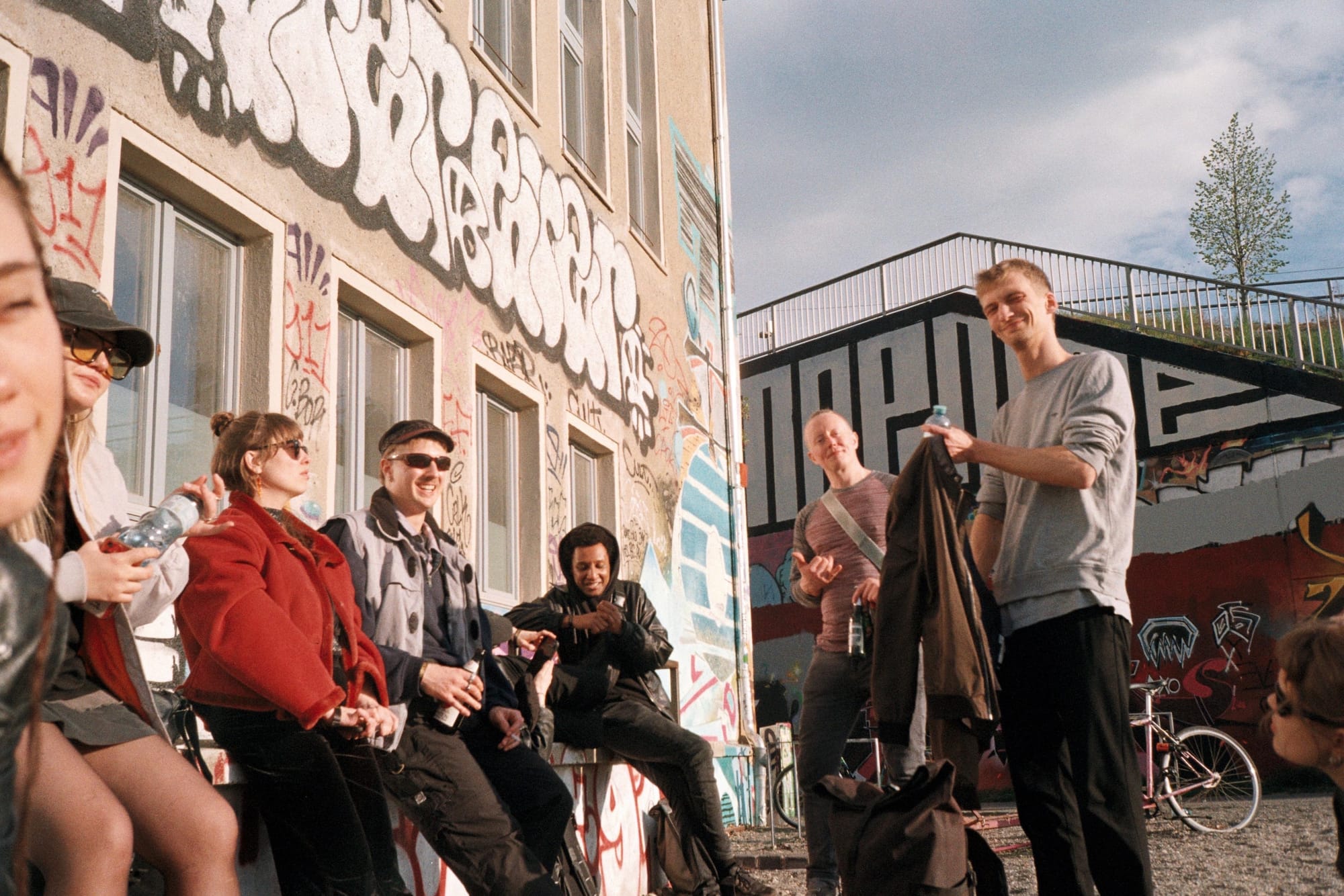
As a kinda problematic child in school with also a problematic family background, the techno scene was a welcoming and judgement free, new world for me. I don’t want to sound pathetic with that, but it’s the way many creative people go through somehow within an art, I guess.
You said one thing that really got me: “I asked myself: do I want to do music anymore?” At some point in an artist's trajectory, I think this is one of the most humble and honest questions one can ask him or herself.
Because the general “artist story” is: “I was born an artist; I always loved music since I was a little kid; my dad gave me my first deck; I started to play; this is what I always wanted; this is who I am; I’m where I want to be; I'm working hard to make it happen.”
And honestly, in my opinion, that’s a plot, a speech you build for yourself on what is supposed “to be”, but is quite different from reality.
And I think it is normal to have a crisis in a long trajectory, to ask yourself at some point things like “Maybe this is not for me”, “Maybe I'm not doing it the right way” or “This is not what I want.”
I say that because one of the main goals for many people trying to work in the music industry, in the scene, is to make a full time living from it.
Yes, It is a fucking industry, unfortunately. We always idealize it as a “scene” or “the underground”, but our so-called club culture became a club industry somehow.
That's true, exactly. And also what I was trying to say is that this industry also has a message. As a capitalist industry, it has an ideology. There is an idea of what a DJ has to be, how a party has to be. And it's always based on success. But it is time to question: what is success? In this world: to live 100% from this, even if it doesn't make you perform your best, or true self.
For example, I've spoken to many DJs who burned out, or who don’t like what they do but need to carry on because there is no turning back. No daytime job to rely on. And I think in this industry, there is a tipping point, a point of no return. I don’t know what you think about this.
First, you said something that in my opinion many people don’t want to accept. We all know it, but it's hard to admit: We and everyone and everything around us is in constant change.
You will never be the person you were yesterday, or last year. And having a dream, especially one you develop in your early years, well, this can change, and that is totally okay.
I remember when I started music, I was 18 or 19. And of course, when you decide at that age: “I want to do music, I want to do this music.” This is just your temporal vision. Eventually you change, you start to grow. Only time can tell and prove what stays and grows with you. You may even start to build a new identity, as a family father or mother, as someone who wants to be successful at work, whatever. Your needs and your vision is always adapting and adjusting. And this is what I think is also the nice part of it: confirming yourself and going on further.
As you said: it's humble to ask yourself whether the idea you had in your early 20s still aligns with how you feel now.
And I see this a lot, as you said, too.
In my opinion this is also a reason why people burn out. because they are maybe not really enjoying what they do anymore.
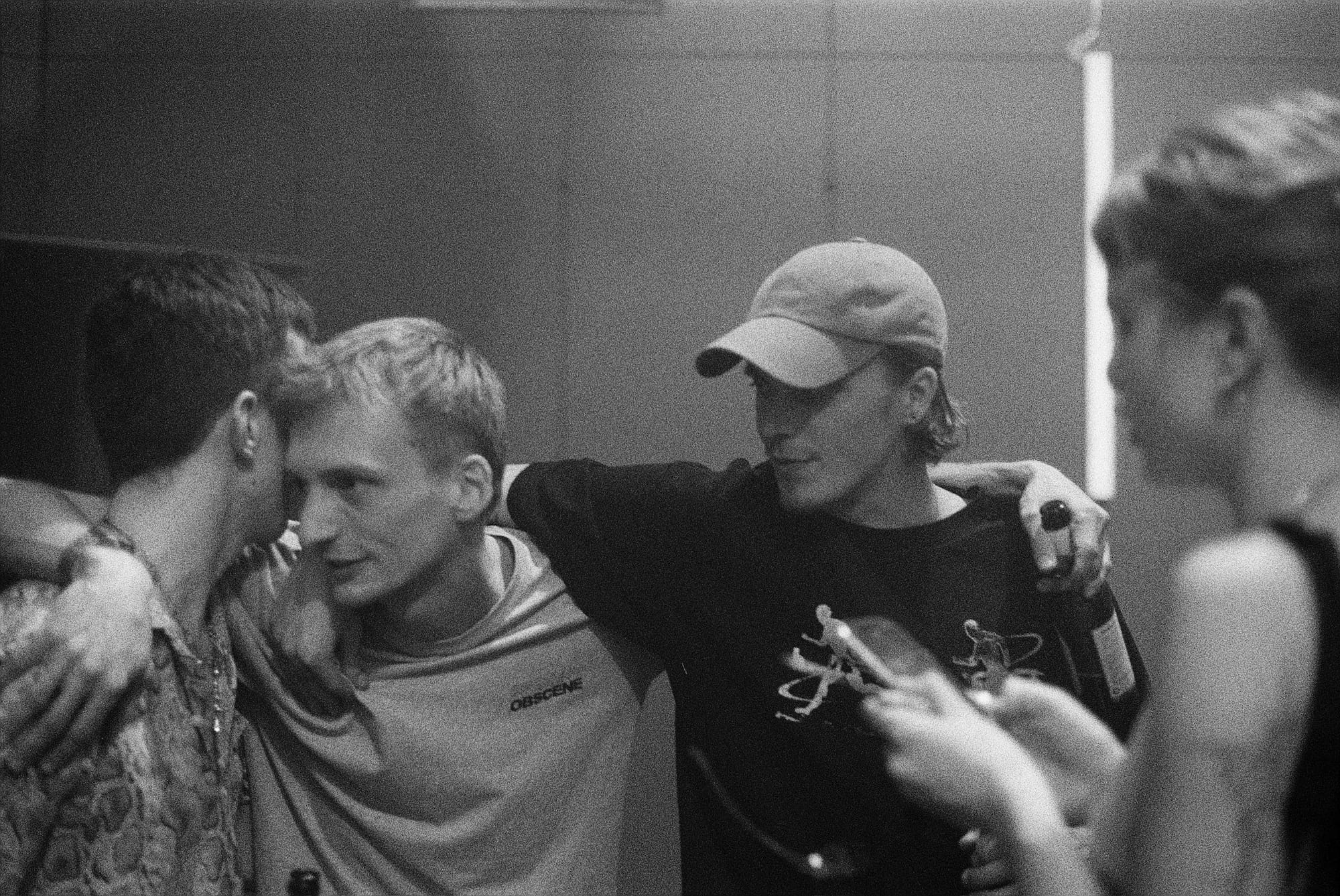
And I see that both of us had this point to recheck on ourselves regarding what you said before. It's this thing: “I know I love it, because this is the reason I have to do it, no matter how bad it feels right now.”
I think a lot of people are stuck in some kind of “not having success”, whatever success means to them, but still wanting it because it’s their idea of how life or their musical career should be. And here’s my lucky point, I guess. There are many things where I feel really lucky, things I never planned, but now I'm in a situation where I can be happy about it. For example:
I’m independent with my own event series. I'm not waiting anymore for anyone to book me. It’s super nice when it happens, but I always have my own next gig in sight. I can do things for myself. So I'm not depending on and especially not waiting for anyone. And that gives me a lot of mental freedom.
Like sending music desperately to labels in order to get gigs. Because this is also very common. It even makes me… not sad, but it's quite astonishing.
For example: some people enjoy DJing, but they start producing because it's the “next natural step”. They never even thought about producing, maybe they don't even have talent, or maybe they never tried to work on it, but they do it because they think it's what you have to do.
It's about how you feel. And this is a very, very good thing you said. What I see a lot, especially in freshly upcoming artists, is this difference between being an artist and being someone who just is a good servicer, a DJ or producer, especially in times of social media. A lot of people who start producing or DJing try to follow and copy the path someone else already took, I feel. It’s about repeating sound aesthetics, formulas of creating content, communication on social media and the way of behaving. This is a problem, in my opinion.
People are lazy, because our brains are lazy. It looks for shortcuts, best case other people already took, so that it's easier to copy someone instead of exploring your own approach and identity. And here again: my lucky point. I never had someone who really trained me, who was my tutor or tastemaker for my sound. I just did my thing for my own. And the best advice I can give to other people is: Don’t watch tutorials. Don’t try to replicate other artists, instead of just going on real exploration. That brings no fun. It’s not active, it’s reactive. You're always adapting instead of creating your own thing. And the people I know who are the happiest in music are those who just do their own thing, who are not trying to “get somewhere”, to get into an agency, or release on a label, or get booked for this festival or that one. Seeing all these hype names on social media… and hearing personal stories… A lot of them seem really not happy with what they do or how they do it. They change styles just to get booked again because the trend changed again. I've seen a lot of people become "irrelevant" by this because they lose their artistic value.
Absolutely. And at the same time, what I think is that if you get attached to the idea of success, you’ll always depend on external things: bookings, money, recognition. Then you start using your energy trying to meet someone who might give you a gig one day, even if you don’t like that person, but you try to get along so you can get the opportunity. You start playing the game… I don’t know if you’ve seen House of Cards, but somehow you start playing a chess game where “winning” means living from this, having an identity, being respected, being a “big fish”. And you get into this game. And in 99% of cases, you won’t reach that point, you’ll get frustrated. And even if you do reach it, there’s no guarantee you’ll be happy.
Because once you “win”, there is no goal anymore. You cannot win in art. In the music industry — you can win because it’s a competition.
And I think that’s the big difference. There are people who reshape everything for the industry, but it’s very difficult for an artist to adapt to that and still feel free or happy.
The last interview I did was by email, but it was a podcast from Awadh. And in that interview he sounded very comfortable with what he was doing.
He also has his daytime job. As JC Laurent he created Awadh’s AKA because he wanted to explore different sounds, like a B-side of his project. And he said, I quote him, “It makes me feel grounded to have a job.” Sometimes he wishes he had more time for music, but he has his gigs, his residency. This is not what it’s “supposed” to be, you know? And this is very interesting, because it’s another approach, not the commercial speech, but the real speech.
Who is the real DJ or producer today? The one trying to be known and famous? Or the one who works another job and dedicates time to this, gets some gigs, etcetera? This approach is much more human-oriented.
I guess this is the interesting thing. If that’s an indicator, I don’t even want to be so “successful”. It already stresses me to imagine traveling every weekend to different European cities, having no time for anything else.
For example, last night, and the last few days, I’ve been playing a historical strategy game. I don’t play video games regularly, but I love these games where you can conquer the world in a historically accurate setting. And I lost myself in it again the last few nights. That’s why I slept long today.
Which game is it?
Europa Universalis. I also like the Total War series. Amazing games. They are also the reason why I'm a bit into Spanish history, or European history in general, and decided to study this. But the point is: I realized while playing: “Great, I am just able to do this because I have the freedom to do it.” My job allows me to work kinda whenever I want, and in music, nobody is waiting for me, except myself. This is also my approach to the label and my releasing artists. I just received, while we were talking, the final pre-masters for the next vinyl with Joline Scheffler. It was supposed to be ready two months ago already, but instead of forcing yourself and someone into pre-planned schedules, it’s way better to realize that nobody is waiting for this release except the artist and me. And that’s okay. We can take the extra time for the sake of quality. We don’t have to fit a schedule, to be on point, to release something every month to stay “relevant”. I don't care anymore. Luckily… The music will still be nice in some more years. If people find it in three or five years, it will still be great. It's all about asking: For what? For what am I doing something? For what does an artist create? For one’s self, or for others and their expectations? And this leads again to the theory of being active or reactive. Am I making decisions honestly and impulsively, because I really want to or am I making decisions strategically based on others’ expectations and the rules of a game? For sure, you can always post at 6pm because ChatGPT says so, or in the worst case play and hunt for music that social media tells you is the most relevant at that very moment. What exactly then comes from you?
In general, it’s funny with social media: Everyone I know who uses it kinda hates it or suffers in a way with and from it. Even those who work in that field. Nobody around me does it with passion. It’s crazy. Nobody really loves social media.
So… what are we playing at?
I also want to connect it to something of my own, which is a bit uncomfortable for me, but meaningful. It’s something I realized after what happened with my burnout. I had the chance to run a series of events on Sundays in Barcelona.
I was very excited about it. The thing is: I decided to go with it because it seemed like a good idea at the beginning, to also play at these events. I started playing when I was like 17, I’ve always had my decks at home, I've played gigs in Barcelona just for enjoyment. But I have to admit, at some point that became too much for me: playing once a month, dealing with bookings (“we’re going to bring this one, and that one"), caring and worrying about ticket sales. I felt really guilty when something didn’t work. Even if I was getting paid a little bit, and that’s good, I accept that my colleague and I were doing a lot of work. For me it was more passionate than a chess game. But maybe for my partner it was more of a chess game: exchange, getting known, moving his career forward, building something. So when we booked someone who wasn’t that well known, I’d start checking Resident Advisor ticket sales every day, stressed. We also had pressure from the club: “Is this working? Is that a “cool” sound we want to bring?” I started to feel like… what you said before:
Why am I doing this? I mean, I don’t even need to play, in the sense of necessity. I love playing, but there’s no obligation. Why do I have to play at every event? Why did we decide that just because we’re the residents? The party wasn’t working that well. Some events went really well, some did not.
But I wasn’t getting, from the club, any real positive feedback, no 100% support. And at the same time, I was suffering, as you said that it might happen. I was suffering a bit. We also had to deal with things like: If we bring this guy, then he wants to bring more artists, but that’s not the concept we created, so we get stuck. And this is how I collapsed. I collapsed while playing. Honestly, it’s something I never expected to happen in that way.
But it was the beginning of the breakdown. I never said this publicly, but I was playing, very happy with my music, on a Sunday afternoon. We were in a dark club, Sunday afternoon, sunny outside, and you start to subconsciously question yourself: “Is this where I really want to be?” And suddenly I was playing a track and I stopped the music by mistake. I thought I was stopping the other deck. The club went silent. I tried to recover — I played the track again, started the track again, but it was a complete downer. And what happened to me is, as I said, I collapsed completely. I couldn’t keep playing. I started shaking, and not from being nervous, but from something worse, like: “This is not making any sense. What am I doing here?” I couldn’t mix the next track properly. I was really collapsing in real time. Thinking about it with perspective it’s when I realized this was something else. If you’re in another mood, maybe you just stop, say “sorry”, and carry on. But I couldn’t. It felt like a whole trajectory collapsing in a single moment, forcing me to accept that something was wrong. Then I had to stop playing, rethink everything. And then, of course, I had to deal with a lot more stuff afterwards. But that was my kind of collapse. And it came from this whole chess game that I didn’t know I was playing, as a consequence of all this.
First of all, I’m sorry to hear that. But I’m also happy for you, that you had this eye-opening moment for yourself. It’s crazy to say that, but I guess you know what I mean.
Because what you describe, that moment with the mixing of the next track, might have been already way past the point where you should have stopped. It was the point where you realized that it’s too much. This was just the trigger that put it in front of your eyes. And that’s interesting because it connects to something I’ve thought about which applies to a lot in music: You start with a great intention, for example parties with a special approach. That’s great. It works once, it works twice. And then you start to take shortcuts, also for economic reasons. You book maybe less for the sound or person behind it but for the reach and the performance. Same goes with labels. Instead of taking the time for an honest exchange with an artist you can skip the discovery and the exploring part and just demand a list of demos to choose 4 tracks from for an EP. It’s the easier way that works on the surface. You might have a local pool of DJs here, and some big names to just puzzle something together for a night to sell out instead of really curating it.
Which is what you said: it becomes about selling out the night, not about the idea. And this is something I have to question myself with every event and release I do. As I said I am luckily not depending on income from that, but of course I am also bound to the economic realities. I really always have to think about the idea of the event every time again, and that’s good... And I guess that’s the thing with routines and the chess game: you subconsciously know about it. And some people don’t admit it, not even to themselves. And when you get stuck in this loop, you start to make decisions based on new parameters instead of the ones that really mattered to you in the first place, like "Should I stop doing events if they don’t sell out? Should I stop releasing music that is great art in my opinion but that doesn’t sell well? Is a good producer the one that releases on a formula a lot or the one that goes on exploration?" There are people I know where I’m deeply sad that their music is so ordinary, because they have a lot of potential, but their music is soulless in my eyes as they follow the game in my opinion. It’s just trying to make the next overproduced hit.
It’s the same with club nights and the club culture. Lot’s of clubs have lost something, in my own experience and from what I hear from others. I’m happy I got to witness a bit of it before it more or less collapsed during Corona completely. Clubs unfortunately lost their social aspect. For me, the difference between a club and a location or venue is the social aspect. A club means a social construct of people, recurring guests who know each other, at least a little. You go into that place and you know: “I will not be alone.” Other than that, if you go to “just a venue”, you can feel alone, even with friends, because it’s not about the social interaction and exchange, it’s about having a concert with big names and making money. I had a situation with a club that initially wanted to book me but trains were not running that day and the gig was initially delayed. Then I was told: “Yeah, we thought again about this. You’re doing good music, Jan, but we cannot book you. We’re not Berlin. We have to go for what people expect: more trance and pop edits, more harder techno…” And I was like: “Okay… but why don’t you book music like mine anyway? You have four slots that night in which you also could challenge your crowd. Bring them something new, something they don’t expect.” I never got an answer. As I completely understand the economic pressure of this I think it is also a self made problem. With changing the artistic direction of an institution like a club you automatically have to deal with the guest’s response. And that’s how you lose something within the night. This club has had to close down in the meantime by the way.
The club I was talking about before had the same problem. When I joined them, we were a big, nice family. Everybody knew each other. We were a small community in my town, with around 200 “active” people. You’d know each other even if you didn’t know everybody well. You knew the names, who was connected to whom. Over time, the very few times I went there after Corona I didn’t know the people anymore. The characters not only changed but also got less in numbers. In consequence, they were hunting for just any people, not the right people again. They tried with various new formats, Drum and Bass nights, goa nights and evolved to a more unspecific place than it was before. Shortly said, they lost their core. Back then, nobody really cared about the lineup. We just knew it would be amazing techno. I was there nearly every fucking weekend over more than two years, and even if the music was disappointing, I still stayed, because I knew I’d have fun together with my friends. And this creates a “club”.
Something changed also in general with the perspective on clubs I feel. People need to know a name on the line up. They need someone’s or the advertisements recommendation. They need specials that make the event even more outstanding than the one before. Of course there are still places and communities that make it better and right and I am more than happy to still have access to those, too!
I want to go now more into your personal projects, especially your label: how it started, how it's working, what your plans are… Because you can see there’s an approach that’s not based on “what’s working,” “what’s the next big thing,” “who’s going to play it”. It’s much more than that, even the releases feel like albums, with long developments, some tracks are dance-oriented, others aren’t. Because there’s also (and I don’t know if “funny” is the right word) a particular approach to music for many labels. To me, there are basically two types of release strategies. One: everything dance-oriented, 100% techno, strong, made to be played everywhere, aiming to be the next big track. Or, the second: giving the artist a chance to display his musical vision more freely. For example with ambient music, experimental cuts still alongside massive dance floor tracks. This is an artist’s identity because there is more than just what feeds the mainstream.
So you get: intro noise track → dark ambient → techno banger → techno banger.
The approach of having a different sensibility, taking the risk of not being labeled in one single category, that’s getting lost. I don’t know what you think about that or how you approach it with your label, EXEKUTE.
First EXEKUTE release by BIEMSIX.
Yeah, I like what you just said. An album or more conceptual approach is definitely something else.
When the release tells a long coherent story or at least delivers a coherent soundscape within and best case also delivers a meaning, as a “milestone” of your personal craft, that is an album. I also prefer to use the term “concept release” rather than “album” for my label at the moment, because I still don’t think these are real albums yet. That may come one day. And yes, that might be not only dance-floor-oriented, though it already isn’t.
But here’s the thing, and I guess this is the big difference again between culture, art and industry: A lot of people just want the boom-boom dance floor-oriented thing, the next overproduced track. And that’s totally okay. It’s okay to feed those people; there’s demand for it, the “market” works like that. Very few of the people who go to clubs are highly interested in the music itself. I know a lot of people who go out because they want to have a good time, want to meet friends and new people, maybe take drugs and dance to whatever music there is. They don't care who the artist is and what meaning might be behind the music. And that’s fine, too.
Very few are truly interested in sound, in active listening, in research, in sound synthesis and systems. That requires a certain mental setting, curiosity, and maybe also preconditions. Some people have that; others don’t. And that’s totally fine. I for myself want to go as far within music as possible.
What I also want to do with my events and especially the label, is to keep the perspective “How would I love to experience this if I were the artist here?” I’ve had a lot of bad experiences with labels myself in the past regarding communication, payments, appreciation and valuation from labels. I want to do this better.
For EXEKUTE, I simply follow some rules. I want the artist to feel someone genuinely cares. I don't want to release music for the sake of releasing. I want to put something out, where I can look back in 10 years and still say: “This is great music. I know the person and meaning behind it. I remember our long talks, the exchange and the creative struggles.” It takes a lot of time and attention to achieve that, but I like it that way. Like we do it now. And it gives the artist the feeling that their music matters in a time where music, especially digitally, is devalued and has become a product of consumption. Right now, my focus is not on sales but on building the label’s identity and building a reputation. Of course I want the label to be financially stable and at the moment I'm still putting in some personal money. But if everything goes well, maybe next year the sales will refinance the next vinyl by itself and then the next and so on. That’s enough for me then. I don’t need to make a living out of this.
From the perspective of a releasing artist: The platform must feel good. Not just like “another step on the ladder.”
Let me give you this example: Diffuse Reality. I don’t know the people personally and I don't want to judge them as humans. But the way this label is working is at least criticizable… using free stock pictures for covers, sending copy-paste messages to a lot of profiles, not providing contracts or speaking about remunerations. There is no personal connection. I have some friends who have experienced this. The process is a machinery: a release every week approximately. That way there is no real possibility for music to breathe, to be special. What is the artist’s reward? Why should I invest my work in a project that is just “the next release”on another platform? This does something to the scene and the producer’s, too — it affects the value of a production, how it is perceived by the listeners. Is it special or "just something"? And here we return to the core question: For what I am doing this?
So my approach is to not join the flood of meaningless releases. I want to create a space of my own. To network with people I appreciate as humans and for their art. People whose music I genuinely admire. Bringing them together, building independence from the toxic parts of the outer world.
Second EXEKUTE release by ADILR.
The next release with Joline Scheffler is a good example. She said to me she couldn’t imagine any other label releasing those coming tracks because they’re too personal for her. We also skipped the idea of having a remixing artist even though it would have been profiting for the reach of the release. Joline rejected multiple offers in the past for releases. She doesn’t want to be exploited. Hearing that someone is trusting me and that I can take good care of such projects really means a lot to me. So yes, maybe that’s my answer on what my plans are. There’s no schedule. I will give every release space to breathe. Nobody is waiting for us. Nobody demands speed. The same goes with the urge to heavily promote on social media. I rather grow slowly with an organic reputation instead quickly with great marketing.
Instagram will disappear or be irrelevant one day —like Facebook, like everything before. The only social media platform I really care about is SoundCloud. I hope SoundCloud stays for a longer while because there’s still no real competition.
Coming back to the analogue world I hope that in ten years someone goes into a record store, finds a new or old EXEKUTE release without knowing the label, and says: “Wow, this music is great.”
Maybe they return to the label’s catalogue again and again because they know the curation is good, independent of specific sub genre or the name of the artist. It’s important for me to build reputation through quality, not names.
I didn't start the label to prove to anyone. Nor for money. It was an intrinsic urge to create and the logical consequence of what I did and experienced before. The same with the event series: I do it for my own also because most other events disappoint me. So I created my own space and this is now happening every two, three months.
Now I play my own game. Maybe not perfect, maybe not optimized. In some years I’ll know if that was the right way but, for now, it aligns with me exactly how it is. I’m a “positively egoistic” person and all the things I do, I do them just for myself. To explain that a little bit better: Everything we do —in my humble opinion— is in a certain way egoistic. Let’s take for example friendships. We seek good feelings from others, so we start to invest into a connection that is however rewarding for us. The same is for me and the music.
I was thinking about this “positive egoism” you said. I think it’s honest, and it makes sense. And I guess maybe it comes from your philosophical background, because studying philosophy is studying human nature. For example, when we talked about these labels releasing young artists, the “famous artist” saying he’s giving them an opportunity, I think it’s often egoistic in the bad way. They’re out of ideas, burned out, posting content, using young talent for free. So your approach feels very honest, even if it’s not widely accepted.
I’m curious about your humanistic approach at University. Did any philosopher influence your way of living?
First of all, the difference between a positive and negative egoism is simple in my opinion: It’s positive as long as you don’t harm anyone, step over others interests. Again take a look at relationships. From the mentioned egoistic perspective you just don’t want to be “alone”. You seek good feelings that another person could give you. Best case, you give it back. That’s mutual positive egoism. But taking advantage of others, profiting on the back of someone else, that’s negative egoism. About the philosophical part: Yes, it surely influenced me, but not in a direct academic way. I studied philosophy out of interest, not to really work in that field.
For example, one thing that really shocked me and was very enlightening, not in a good way —it was very uncomfortable, but I had to accept it—was what happened when I collapsed that day I told you about, while playing. It was the first time that, later on, I asked myself: Did I want to play that day? Was I in the mood to play, or did I feel I had to play?
Because, to be honest, that day —when I rebuilt the story in my head— It was a sunny day Sunday afternoon in Barcelona. I was having a coffee outdoors just before. Everything was chill, you know. Then we got into the club, into the darkness, in the middle of the day. A lot of friends came to the party; they were talking loudly. The monitors weren’t that loud at that moment, because it was just the beginning, so I could hear people talking a lot. And I mean, it’s not their fault, of course, seeing friends and talking to them excited, because you’re happy to see them… but maybe there was a part of me that thought: “This is not my day to play.” But of course you love electronic music, you love DJing, so you feel like you can’t ask yourself that question. Because everyone else is performing too, so: “Why shouldn’t I perform? Everyone else seems perfect. Why shouldn’t I be perfect too?”
Fuck the perfectionism, it 's art! I like to take the metaphoric example of a drawing artist: If you have maximum freedom, you best case enter your atelier with the feeling of “I want to paint”, and what you will paint exactly will be told by your intentions and preconditions. As a DJ, you also have to follow the industry's rules. You maybe have a contractual set time, you have to play… and best also feel it exactly in that very moment. Additionally to that there are expectations on your sound, your behaviour and performance. I think it’s extremely crucial to be aware of who you are doing something for and remind yourself that it’s first place for you. You can think and act differently, but I think that this is definitely not the road to happiness.
That 's it. And also, you say to yourself: “No, I have to be happy, because there are so many people who would love to have my slot here.” But what if, that day, you don’t want to play? What if you feel you’re not in the mood? I didn’t even ask myself that. I had to ask myself that later. And then the question got bigger, actually. It became: “Do I really want to go to this festival? Do I really feel I have the energy?” Like, when I was in my twenties, 25, 30, I wasn’t losing interest in actual music, but I was losing the way I used to be there, never-ending partying, and getting into an intense way of life. Maybe I’m getting tired of it somehow. Maybe I need to step back and then see how I come back. Maybe in two or three years I’ll go to a festival and enjoy it again, or not. There’s no clear “yes” or “no”, no closed answer. But it was the first time I seriously questioned myself about something I loved. I had tried to be like a horse with blinders on—“I love DJing, I love playing, I love this, I love music, I love techno”…and then, boom, I collapsed. And then you start questioning:
“Do I really love this? Do I really like this? Was I doing this because of that? Because of this? Because of something else?” And then you have to accept that you made mistakes, because you were pushing yourself too far.
This is very interesting and I totally agree with you on that. I think I said something a few minutes ago and mentioned that you have to adjust to new situations in life. What I’ve realized is that everything in life is a constant swinging of ups and downs. Around that sweet spot we aim for and there is enough potential energy to fall back into that dip again. Whether it’s a real downer or just the next goal to chase for. Not only is this swing needed to feel alive and value the very opposite, I’m not talking just about good and bad moments: our brain, our rational part, wants stability, a constant line or this “sweet spot”. Like: “I love music, so I have to love playing. Always feel creative and optimize everything for the best and precise output.” That’s the line. But to really enjoy this, you need these ups and downs, embrace the falls and the step-backs. I’m so happy that, after all those moments you described, we are now sitting here and you’re still interested in music, and adapting to where you are now. You’re asking: “What can I do now to get good feelings out of it, when it’s maybe not playing at the moment?”
I am very glad you started journalism again. And this is your personal freedom again, connected to the other topic you mentioned: the freedom that is needed to avoid burning out. Because if you’re in this tunnel, lying to yourself: “I need to have fun right now. I need to do that.” Then you act under self made pressure that is growing… And we tend to think the pressure comes from the outside. But we are active and have control over ourselves. You cannot force yourself without having to live with the consequences. The worst case is collapse, burnout, leaving your passion and hobby.
I know some people I met in my younger years, local DJs doing their thing with an attitude of: “Yeah, I’m just doing it because I’ve been doing it for ten, twenty years.” Not with the curiosity they may have started with. Every now and then I think about these people and check social media to see what they’re doing or not doing. And it’s funny to see how some people just disappeared over time, even though it was their whole identity. Very few managed to recreate themselves.
Another example: There’s one person I know who runs a club “on the side”, but he handed over the operative control of it. Now he’s a horse photographer in Iceland. That's his living, his dream, his passion now. I don’t know if he even is still playing and enjoying techno, but he seems to be happy and found his place. I would prefer adjusting to the swing instead of clinging to a pressured idea and losing the passion I once had for something.
So the best thing one can do is in the end not even get into that self made path of pressure to keep the opposite: freedom, which is a core aspect of art and creativity in my opinion.
To connect with what you say, I see another version of this, very closely, in people I know. You see people in their 40s or late 40s who still haven’t been able to quit, not collapsing, not burning out, just continuing. I don’t know what’s worse: burning out and stepping aside, maybe re-approaching things in a different way… or still trying to play the chess game at 40 or 45. Criticizing the young generation: “This is because techno music changed… the scene is not anymore like when I was young, it was better back then.” Blaming others: “It’s other people’s fault that I don’t feel good.” “I’m not successful because I’m true to myself, and I make music no one understands. I’m authentic, this is how it should be.” And then they criticize younger people with more success because they’re “not doing real techno,” because only they know what real techno has to be. Then frustration and anger appear. They gather a few people around them who admire them because they’ve done some releases, some gigs. They try to influence younger people to feel important. You get someone who’s just getting into techno and they say: “Yeah, yeah, don’t listen to this, it’s commercial. Listen to that, this is the real thing. Detroit, this, that…” There’s a whole story behind it. And most of the time, it’s guys—male, in their 40s or 50s—who are still getting gigs and fighting. And maybe it’s time to leave it, you know? Or maybe not. But my impression is that they’re not doing any good to anyone. Not even to themselves. There’s an ego there that’s not positive. It’s stuck to an identity that was created, and they cannot question it because it hurts. It hurts to see you’ve been acting, playing, making music in a way that doesn’t really fulfill you, even if it looks exciting.
Actually, It makes me a little bit sad what you said right now... Talking about our mutual observations on the state of the “industry” makes me feel a bit tired and demoralized. As I said, art needs a kind of freedom, it feels like the current situation is potentially impeding lots of great art and their artist, if they don’t play the game. It impedes the potential our sub culture could have. There are still the right people like you and me creating things with heart and passion, luckily.
I’m reading a book right now that talks about being creative. I’ve got it here, it’s by Rick Rubin, The Creative Act: A Way of Being. It’s really about what it could mean to be creative. Like I said: even having a conversation with someone is creative. Furthermore it’s about: How do we get inspiration? What exactly is inspiration, how do we gather information and what are our filters?
We should try to get as much information as we can, to then re-create things. Culture is based on this and an ever evolving network of all these little dots: us. Take myself as an example: I’m the sum of all my influences throughout life. Creation is the reproduction of all this, but with my inner intentions, interpretations and feelings. And as the logical consequence: the highest goal an artist can have, in my opinion, is to inspire other people, the next dots. Not in a forced way, but by giving someone a feeling of: “Oh wow, this is interesting. This does something to me. It makes me want to create, re-create, or do something about it. Dance to it, talk about it, interpret it.” That’s how culture works, how networks work. Also you have definitely inspired me, otherwise we wouldn’t have this connection. I wouldn’t have done the track for your release series, or even got in touch with you. Because I felt: “Okay, this is something I am good with. I get a good feeling from talking and working with that person and my visions.” That’s what people naturally get from an open cultural community and their interactions. They see: “Oh, this person does something interesting, music, art, the way they talk, etcetera... I want to implement a bit of that in myself.” Consciously or subconsciously. The music I hear, the people I know, everything that leads me to be creative in the way I am. It’s not a purely personal decision; it’s the sum of all that. But if we have this toxic environment where these “multipliers” are not acting with free intention, because they’re playing “the game”, the chess game, that poisons how culture exists and which information we receive in which way.
What the game and the rules of the industry also impeded: there’s no real new music in the mainstream anymore. The last musical revolution was in my opinion in the 80s/90s with techno and the following sub genres of electronic dance music. Before that, the 50s had their music, the 60s had theirs, the 70s theirs. There was always something new. Since the 2000s, there’s no truly new groundbreaking genre like that on the surface. We had soul, jazz, reggae, rock, … but after techno, no big new musical language. And that’s also because this industry keeps us stuck in the loop: reproducing what already exists, instead of exploring something new. Maybe with some more years of distance I will think differently on this, hopefully. I am just a bit pessimistic now. Let’s see.
I remember the precise moment you reached me a few years ago. To be honest, at the beginning I was like, okay… but my first reaction was more skeptical. Because people send you a thing and a story, but your way to approach me caught my attention, and when I listened to your music I felt like: “What the fuck, this is really good,” and then I was like, of course we can do something together. And time passed and we started sharing, and I saw you were doing super interesting things. And then we finally got to this conversation where I can explain things to you that I haven’t explained to many people in the Barcelona scene, because I haven’t had the chance, because I disappeared somehow. And then these people disappear too, because you don’t see them in the clubs, you’re not talking about lineups, you’re not talking about music like you used to do, because you’re off the game. But thanks to conversations like the one we’re having, it keeps making sense despite the crisis I’ve been through.
Through Oceans (Dub Mix) by Jan Goertz · Released in 2023 on Dust Trax.
One thing I really liked that you said —and I guess this would help a lot of people— is about vulnerability. I’m also in a lucky position because I am not afraid anymore of being vulnerable. It’s maybe not an easy but definitely a rewarding decision to be open with your feelings.
I definitely needed therapy for that, too. This leads me again to the topic of being active or reactive: Do I play the game because everyone is playing it and I have to be cool and invincible right now? Or do I just be right now, and for example can accept that not everyone will like what I do?
And yeah, the reason I wanted to support you: I just thought about it, I don’t exactly remember the very first impressions I had, but when I stumbled upon your site, I remember that it was something of its own kind. I saw the digital picture of a project that was driven by passion and dedication not by the numbers of followers or reaction to the work or advertisements. There is a lot of passion needed to be able to avoid these traps. And this is what I felt was inspiring, because I guess it also hooked me at a point where I was rethinking things myself, like with the club and everything going on. I guess we met around 2019–2020, could it be? That would fit perfectly with those things. And it was kind of inspirational in the more general sense of: it’s great that people do their thing for years just for their own pursuit, somehow.
I really appreciate your words on this, they are meaningful and I agree with them. I’ve always written because I really enjoyed it. Bringing together my journalist approach to electronic music has been a key point about Vanity’s identity, and also my way to understand music through words and no boundaries, no trends, no length limits or pressure from an editor. For example, my way of writing during the pandemic was: receiving a track or an album, an EP, basically to release a premiere. But then I wrote an article that was a complete story of my own game, something that really challenged myself creatively. If the title of the track was like, I don’t know, whatever, I started to think about that “whatever”. I started to get information about this, trying to imagine what the artist was thinking with that, even if they were or not. And I wrote personal stories, I interpreted stuff. I had a lot of fun with it. And maybe someone read it and had fun too, you know, because that was the idea. Not talking about the music like I am an expert: “I know, this track sounds like this, this is done with this modular, with this synthesizer…” No. That’s not my thing. I’m not that experienced. So I just wrote at a free-speech level, you know? A kind of freedom that I wanted to explore with techno, for example. And, as you say, at some point I decided to filter interviews. Like, 90% of the interviews I got in my late years I rejected, especially interviews by email. Only in special cases I accepted, because they’re not natural.
I had the chance, and this is a personal story, to interview a very trending artist a few years ago. I got an offer from a magazine to do the interview. And it’s really commercial or whatever, but I thought: They pay me something, and why not, I’m going to meet this person and have a proper conversation. That was my idea. So I went there. It was a live interview; there was some video and stuff, but I wasn’t appearing. I could sign the piece if the interview was good, so everything made sense to me. The truth is I enjoyed our chat a lot. The artist answered super clearly, super calmly, being really honest and telling things that weren’t a simple pre-made speech. My surprise was when the written interview was published. The magazine was contacted by the manager of the artist, asking to unpublish it ASAP, as the interview was too personal and didn’t fit the commercial storytelling the artist should sell publicly. So here we come back again to the chess game.
And it’s interesting to hear what you just said: that the artist is in fact not like that, that he or she intentionally wanted to be something else, personal and direct—that was driven by other forces to not be him or herself. That’s what you want to tell me, I guess, right now.
Yes, hundred percent. The artist explained things that were completely natural: how she got into music, what was doing before, why named a certain track… And it was really personal stuff. And I was like: Okay, interesting, let’s go on. But when I got home and wrote, and I worked for two or three hours to translate everything and prepare the piece, the manager read it and said: Cancel the interview and unpublish it, as I was saying just before. There wasn’t even a single answer that felt “safe” for him. He said: “I don’t want this piece. This is not the way I want my artist to be seen.”
And what did the artist do about it, what was her opinion about it?
My impression is that the artist was just assuming it, simply didn’t care. It’s the price to be paid. And that’s sad. Probably didn’t feel even bad about it. This is the business, it is the way it goes. That’s why in most cases you read easy, simple and pre-produced interviews, because they ask more superficial things like: “What do you feel when you have 10,000 people in front of you?” “Where do you get the energy from?” And the typical, boring pre-made answer; “I try to connect with the audience, it’s my best time…” That gets published. But if it’s: “How did you start?” And the real answer is“I was living in Ibiza, working in a bar, and one day I had the chance to play…” This is too low profile for a manager. But that is the truth. That’s how it works. This is basically how it goes at the top level. The top artists are like this. And then, if you go down, you can see the chess game a bit more… how do you say, in Spain we say "cutre", like mediocre, mediocrity. Interviews where you try to sound deep and authentic, but it’s not. And then you try to get gigs. And you start to build yourself a story about what you think might sound good to others. For example, I can tell you another personal story from that time. It was a personal email interview with an uprising, respected techno artist. And I really liked his sound. It was a good thing, I thought it would be worth it even if it was by mail. But his answers were completely boring, predictable. It was totally unreachable.
Like: “What about your label? Have you had any bad experiences with labels?” Because he was releasing a lot of music. And everything was “perfect”: “No, all the artists are good, everything works well…” And this kind of person, when he got even bigger I asked him for premieres sometimes and he didn’t even reply. So you see: what’s going on there? I’m interested in an interview. It comes from a press agency, he works with press to get “interesting advantages”. And once you offer him a voice, he just answers “blah blah blah”, and you get a boring, predictable interview from someone who doesn’t even want to give you some honesty. I’ve never heard anything more from him anymore. And I even have a worse story. It’s not about talking shit about people, we know there are other kinds of worries, other philosophies, but this is what I had to face. And maybe I wasn’t honest enough with myself to say: “Why am I doing this? Why am I trying to fight in this game, to get these people?”
I interviewed an uprising and interesting female artist. In fact, I got offered to interview her. We did a live chat; we stayed like two hours talking. She was really good, very interesting. It was great. We even talked via Instagram afterwards. I published the interview, we both shared the post. At that time she was, let’s say, mid-low, with an interesting trajectory. She was doing this techno–trance kind of thing. Not like now—gambling—but she was a rising, interesting artist. There was a release that was good: not my favourite thing, but I thought, let’s give her a chance and we can have a great talk. And I was quite happy about the interview. We kept in touch via Instagram: “Hey, I’m playing in Barcelona, maybe you can come", this kind of great thing. And at one point she starts growing: more lineups, more everything, and she stops answering me. I wasn’t bothering her at all, we wrote each other from time to time. It was just: “Hey, how are you doing? I saw you’re coming back to play in Barcelona”. Because I didn’t go to that gig. No answer. No answer.
Seems like that you were not “profitable” anymore.
Exactly. And at the same time, I saw several posts being deleted, and the interview post that was on her Instagram,like: “Hey, I got interviewed by Vanity Dust,” was deleted. Vanity Dust was no longer being followed. She and her manager got what they wanted from me, and then, who cares about it anymore, just “next”, move on, keep growing, no matter what. I guess she probably had to give control of everything to someone else; before, she probably was still managing her social media and then someone took over, started to see what was interesting, what was not, what was cool, what was not, which people to follow, which people weren’t big or relevant enough. Probably they looked at the profile, saw 2000 followers or whatever, and boom: deleted, blocked, started to work the profile into “verified” and whatever. In the end, as a journalist, you don’t expect that much from people you interview or collaborate with, this is not the point of my work. But when you have a proper chat with someone, you open yourself, your mind, you dedicate time and effort, you become somehow vulnerable. This is the cost of being vulnerable: you can be hurt.
I understand what you’re talking about. I have a different but still similar experience with some people from the past.
There for example is a guy I met as I would say a friend during multiple nights at another club I was playing on a regular basis for some time. After Corona and with time passing by the contact got less and everyone went on an own exciting journey. He actually got very successful and busy with his new platform, with the support of some industry heavyweights and new connections made after his move to Berlin. In fact I can just be happy for him.
We saw each other again once and had some short communications but what changed was the intention of the exchange. I felt that I was only interesting and relevant for him when I could deliver opportunities or contacts and when my weird gut feeling started about this I eventually realized I was not even worth the follow on all platforms anymore —don’t get me wrong. I am normally not getting hurt by being unfollowed by other people and I also clean my feed and my following list regularly for different reasons, but with a foreground played nice personal connection, I felt also like just another step/option in the game for him.

This story connects precisely with the ones I’ve shared, and I am also sorry you’ve had to deal with this too. Let’s move back to music, now, as I also wanted to ask you about the podcast you’re going to prepare for You Play I Write. You said that you like to play longer sets, that you like to take risks sometimes, and that you like to push yourself into not-only-dance music, or dance music from a very different approach. What are your ideas for this occasion?
I’m still evaluating inside myself what I want to do, because at the moment I feel very much at home and safe with what and in which way I play it. This is also related to all the preparation I had for my 15-hour all-night-long performance. Especially this four-deck layering of ambient, techno and so on, creating my sound in a more fragile live manner, it is something that really appeals to me at the moment. I’m still trying to find a way, how I want to approach your mix. I’ve just started collecting tracks out of my library. Normally, I prepare like 150-200 tracks for a performance, create a nice intro and then just play around and see what feels good.
I’m not quite sure where to go this time: if I want to do something a bit more different from my regular thing because I also like to challenge myself, or if I want to use the motivation I have right now with my usual stuff. I wanted to wait especially for this interview, because I guess this makes it easier for me to get a feeling. It's easier to go into my collection without thinking too much, just selecting tracks that I like. I don’t want to sit here like: “Oh, I need an idea. Now I need the tracks that fit this idea to optimize my vision…”. This was also the usual stress for me with podcasts in my early years. I have huge respect for people enjoying that way of working. I just want to be free and flow freely as much as possible.
So in a few days I’ll just sit here for many hours in front of my setup, and… I cannot promise you what will come out, but I am pretty sure it will be something nice; that’s the important thing. I might end up again ranging from ambient to techno. I love ambient music, with every year passing I do it more and more. I’m also planning a daytime event in a greenhouse in my town at the moment. I want to create a cuddly environment for a proper listening experience. Really motivated for that. So, I guess ambient will play a big role in the podcast, and mostly and as always just nice sounds. That’s what I’m hunting for. I don’t see tracks as solid units anymore.
For me, the only important thing about a piece of music playing out is: does it sound good? Does it feel right? Do I feel it and those three seconds of the intro already?
I for example also don’t care that much about vocals in terms of content. I love vocals, I love spoken words, I love the sound and the frequencies but I don’t care what they say. I just want them to sound nice. It’s kinda boring for me to understand what the vocal is saying to be honest. Best is when I don’t understand them. So this will be my approach, I guess: delivering very interesting sounds in what will probably be again the dance-music universe somehow.
Artists featured in Jan Goertz’s podcast
A Sacred Geometry · adham shaikh · ÆKO· Akob · Alessio Landini · Altinbas · Ancestral Landscapes · Andre Walter · ANNE · Any Mello · Ariet · Astral Wanderer · Atomic Moog · Augusto Taito · Autolyse · Baal · Barbosa · Ben Gibson · Ben Kaczor · Ben Klock · Ben Reymann · Berg Jaär · Casual Treatment · Catartsis · Chris Liebing · Clara Levy · Claudio PRC · Cleric · Daniel[i] · Dax J · Decoder · DJ Dextro · Dorisburg · Efdemin · Eletun Selona · EREIB · Fergus Sweetland · Flaws · Fog Catcher · Formant Value · Franz Jäger · Frits Wentink & Erik Madigan Heck · Greyn · Had · Hidolas · Hitam · Ina Kacz · Ismael Pinkler · James Begley · Jeroen Search · Johan Krist · Joline Scheffler · Josh Wink · Ketch · Kevin Ferhati · Laima Adelaide· LDS · Leo Cologna · Louis The 4th · LUAR · Marconi Union· Marsch · Matasism · Mechanist · Mezer The Architect · Moses (IN) · Nils Edte · nimu · no.name · Noah Tauber · Noëtik · Ntogn · Ocyra · OTON · Overturn · Peppe Amore · Perfo · Phil Berg · Polygonia · Prismal · Property · Psyk · Purelink · Quelza · R.M.K · Rachel Lyn · Rambadu · Save Your Atoll · Scibor · Sepian · SHXR1 · Sindh · Solarythm · Stefan Goldmann · Teik Arô · The Knife · Trois-Quarts Taxi System · Tsott · Unit · Urlcst · Vanoni · Vinicius Honorio · Vinyl Speed Adjust · Winx · WSMN · Yogg · Z.I.P.P.O ·